
A client in Gloucester came to us after a previous contractor fitted porcelain floor tiles straight into her shower enclosure. Within eight months, the grout had failed and water was tracking under the tray. We stripped the shower back and refitted it with a proper anti-slip tile rated for wet areas, at a cost of roughly £1,800 on top of what she’d already paid once. The tile itself hadn’t been wrong for a bathroom. It had been wrong for a shower floor.
That distinction trips up more homeowners than you’d expect. Choosing tiles for a bathroom isn’t just about colour and pattern. It’s about matching the right material to the right surface, and getting that wrong is one of the most expensive mistakes to fix after the fact.
The Short Answer
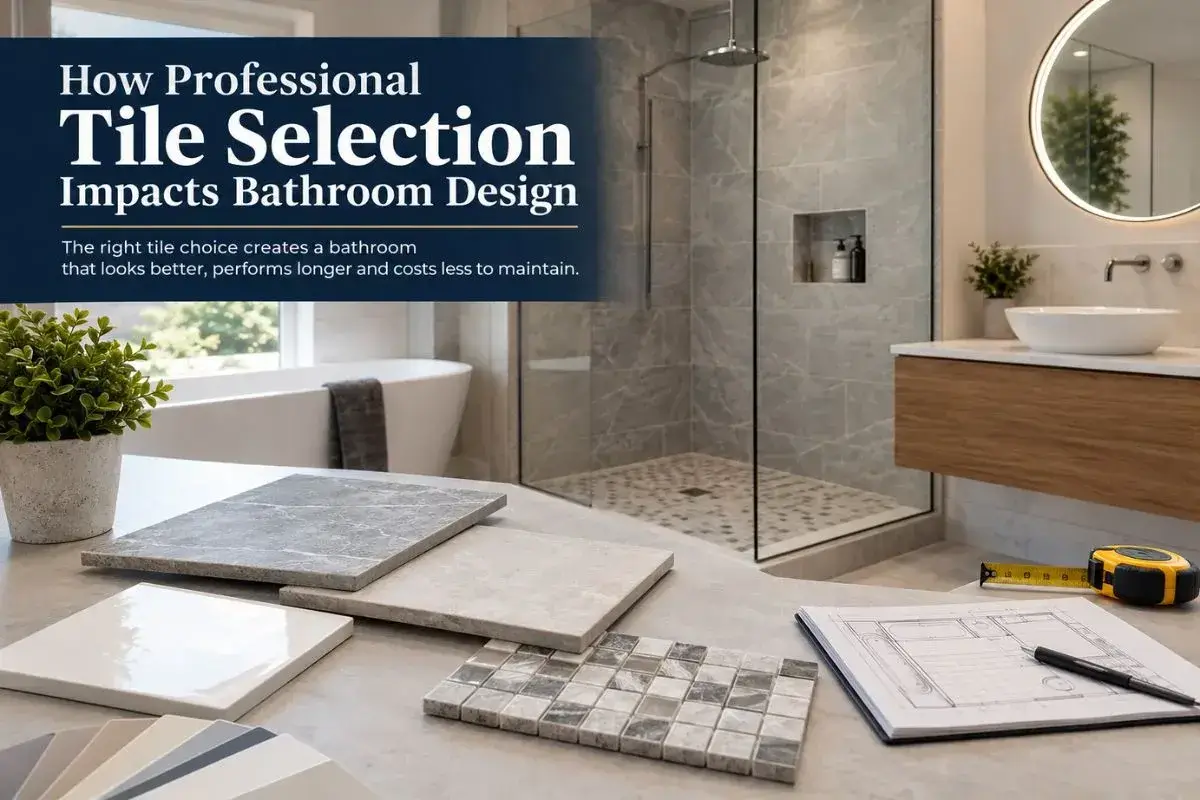
Choosing the right bathroom tile means matching slip resistance, water absorption, and durability to each surface, not just picking a look you like. Shower floors need a different tile rating than walls or a dry bath surround. Getting this wrong leads to slippery floors, grout failure, and costly rework, which is why professional tile selection makes such a measurable difference to how a bathroom performs over time.
Executive Summary
- Not all tiles suit every surface. Shower floor tiles need slip resistance that wall tiles don’t.
- Porcelain and ceramic are the two main options, and each performs differently depending on where it’s used.
- Tile size affects both appearance and installation cost, with larger formats needing a flatter substrate.
- Grout choice matters as much as the tile itself, particularly in wet zones prone to mold.
- Getting professional advice early avoids expensive rework, as our Gloucester client’s experience shows.
- Design tips for choosing bathroom tile should always start with function, then move to style.
What to Consider Before You Choose Bathroom Tile
Before looking at colour or pattern, it helps to think through how each part of the bathroom is actually used. A shower floor faces constant water and needs grip underfoot. A bath surround stays mostly dry and can prioritise appearance. Walls need moisture resistance but not slip resistance. Treating the whole room as one surface is where most tile mistakes start.
Budget also plays a role early on. Larger format tiles look striking but require a perfectly flat substrate, which adds preparation cost. Smaller tiles and mosaics cost more per square metre but forgive an uneven surface more easily.
Kinds of Tiles for Bathroom Use
There are several kinds of tiles for bathroom projects, and each has strengths worth understanding before you commit to one.
Ceramic tile is affordable, easy to cut, and works well on walls and low-traffic floors. It’s less dense than porcelain, so it suits drier areas better than constantly wet ones.
Porcelain tile is denser, more water-resistant, and better suited to floors and shower enclosures. It costs more than ceramic but holds up better under moisture and foot traffic over time.
Natural stone, including marble and travertine, delivers a premium look but needs sealing and ongoing maintenance to resist staining and water damage.
Mosaic tile works well on shower floors because the smaller pieces and increased grout lines improve grip, even when the material itself is smooth.
Shower Floor Tiles vs Wall and Bath Tile
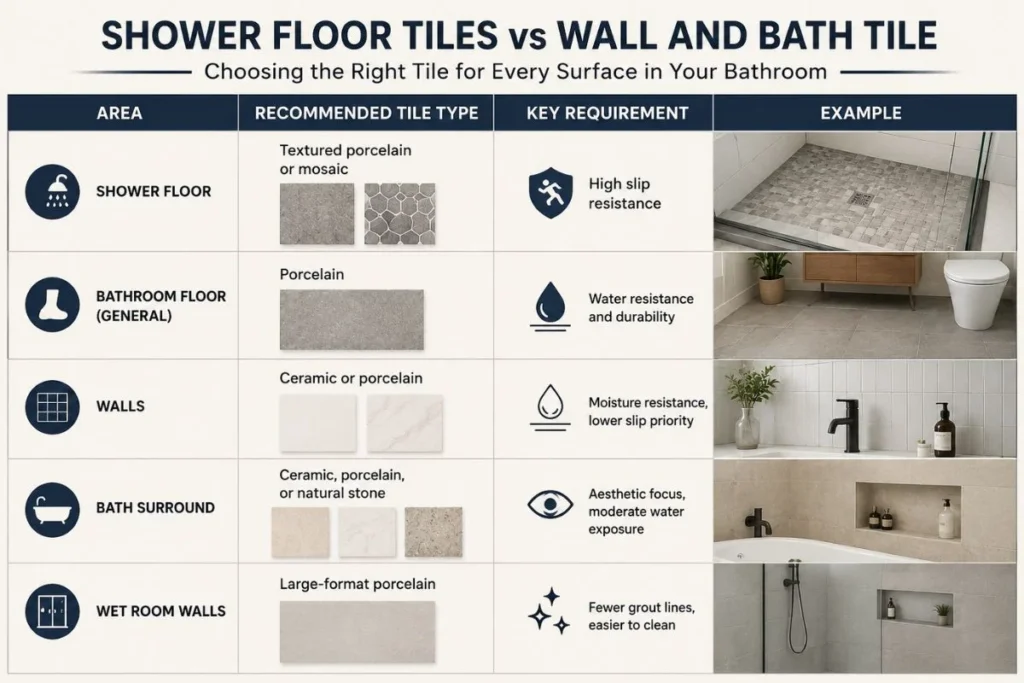
| Area | Recommended Tile Type | Key Requirement |
| Shower floor | Textured porcelain or mosaic | High slip resistance |
| Bathroom floor (general) | Porcelain | Water resistance and durability |
| Walls | Ceramic or porcelain | Moisture resistance, lower slip priority |
| Bath surround | Ceramic, porcelain, or natural stone | Aesthetic focus, moderate water exposure |
| Wet room walls | Large-format porcelain | Fewer grout lines, easier to clean |
Shower floor tiles carry a slip rating that wall and bath tiles don’t need. Fitting the wrong tile in a shower is one of the most common and preventable design errors we see.
Design Tips for Choosing Bathroom Tile
Once function is settled, design choices come down to a few practical principles that consistently work well in UK bathrooms.
Lighter tiles make a small bathroom feel larger, particularly when carried from floor to wall without a strong break in colour. Darker tiles suit larger rooms and can add depth when paired with good lighting. Large-format tiles reduce grout lines, which both looks cleaner and cuts down on the mould-prone joints that build up over time.
Grout colour matters more than most homeowners expect. A grout that closely matches the tile creates a seamless look, while a contrasting grout highlights the tile shape and pattern. Neither choice is wrong, but it should be a decision, not an afterthought.
When Poor Tile Choice Gets Expensive
Beyond the Gloucester shower repair, we’ve seen the same pattern play out in different forms. One Cheltenham client chose a beautiful natural stone floor for a family bathroom without realising it needed annual resealing to resist staining. Within eighteen months, watermarks had etched into the surface around the bath, and the client faced a choice between ongoing maintenance costs or an early replacement.
These aren’t rare cases. They’re the predictable result of choosing tile based on appearance alone, without factoring in how the space is actually used day to day.
Myth vs Fact
| Myth | Fact |
| Any tile can go in a shower if it’s waterproof | Waterproof isn’t the same as slip resistant. Shower floors need a specific slip rating regardless of water resistance. |
| Bigger tiles always cost more overall | Larger tiles can reduce labour time due to fewer grout lines, sometimes offsetting the higher material cost. |
| Natural stone is the most durable option | Natural stone needs regular sealing and is more prone to staining than porcelain. |
| Grout colour is purely decorative | Grout width and colour affect how visible dirt and mould become over time, not just how the room looks. |
| Ceramic and porcelain are interchangeable | Porcelain is denser and better suited to floors and wet areas, while ceramic works best on walls and dry surfaces. |
Decision Guide
| Situation | Recommendation | Why |
| Fitting a shower floor | Textured porcelain or mosaic | Provides slip resistance in a constantly wet area |
| Small bathroom with limited natural light | Light-coloured, large-format tile | Reduces grout lines and visually opens up the space |
| Family bathroom with heavy daily use | Porcelain floor and walls | Withstands moisture and traffic with minimal maintenance |
| Budget-conscious full retile | Ceramic on walls, porcelain on floor | Balances cost with durability where it matters most |
| Want a premium finish and can maintain it | Natural stone with regular sealing | Delivers a high-end look if upkeep is factored into the plan |
Get Expert Advice From Hayden Property Development
Choosing the right tile affects how your bathroom looks, how safe it feels underfoot, and how much maintenance it needs for years to come. Hayden Property Development handles bathroom design and renovation across Cheltenham, Gloucester, and the Cotswolds, from tile selection through to final fitting.
Get in touch with Hayden Property Development for a no-obligation site visit and quote.
Frequently Asked Questions
How do I choose tile for a bathroom floor?
Prioritise water resistance and slip rating over appearance. Porcelain is the most reliable choice for bathroom floors, particularly in wet areas like the shower zone. Our bathroom design and renovation team can advise on the right tile for your specific layout.
What is the best bath tile for a small bathroom?
Light-coloured, large-format porcelain tiles work well in small bathrooms, since fewer grout lines create a cleaner, more spacious look.
Do shower floor tiles need to be different from wall tiles?
Yes. Shower floors need a slip-resistant rating that most wall tiles don’t carry. Textured porcelain or mosaic tile is the safer choice underfoot.
How much does professional bathroom tiling cost in the UK?
Cost depends on tile type, bathroom size, and layout complexity. Get in touch for an accurate quote based on your specific project.
Is natural stone a good choice for bathroom tile?
It can be, but it requires regular sealing to resist staining and water damage. Homeowners who want a premium look should factor in ongoing maintenance before choosing stone over porcelain.