
If you’re a landlord or property investor considering converting a house into a house in multiple occupations, cost is almost always the first question, and rightly so. An HMO conversion is a significant investment, and getting a realistic picture of what you’re looking at before you commit is the only sensible way to plan a project like this properly.
In this guide, we’ll break down the average cost of converting a house into an HMO, what actually drives that figure up or down, and what to expect in terms of ongoing maintenance once the property is up and running, specifically for landlords working in and around Cheltenham.
What Is an HMO, and Why Convert?
A house in multiple occupation is a property rented out to three or more tenants who are not from the same household but who share facilities such as a kitchen, bathroom, or living space. For landlords, HMOs are often an attractive option because they typically generate a higher rental yield per property compared to a standard single let, since you’re collecting multiple tenancies from one asset rather than one.
That higher yield comes with higher regulatory requirements, though. HMO properties must meet specific fire safety, room size, and licensing standards set out by local authorities, which is exactly why a proper conversion, rather than a quick DIY job, matters so much both for compliance and for long-term tenant retention.
How Much Does an HMO Conversion Cost?
There’s no single number that applies to every property, since so much depends on the size of the house, its current condition, and how many additional bedrooms or facilities you’re aiming to create. That said, most HMO conversions in the UK tend to fall within a fairly identifiable range once you understand what’s actually being priced.
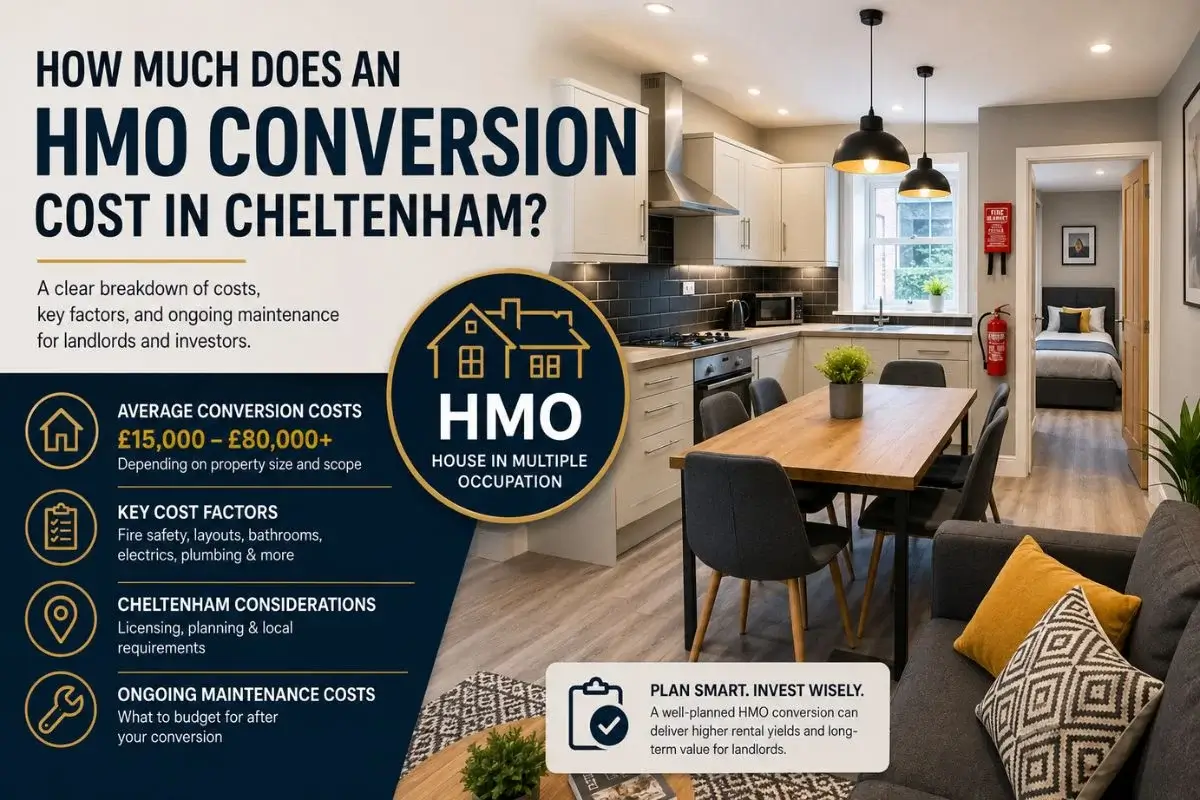
For a standard three to five bedroom property being converted into a compliant HMO, costs typically range from around £15,000 to £40,000, depending heavily on the scope of work required. A lighter refurbishment involving fire doors, additional locks, signage, and minor updates to an already reasonably modern property will sit at the lower end. A full structural conversion involving new stud walls to create additional bedrooms, extra bathrooms, rewiring, and a completely reconfigured kitchen will push well past the upper end of that range.
Larger properties being converted into six or more bedroom HMOs, particularly those requiring loft conversions or extensions to add extra rooms, can run considerably higher, sometimes exceeding £60,000 to £80,000 once structural work, planning costs, and full compliance upgrades are factored in.
What Actually Drives the Cost of an HMO Conversion
Understanding where the money actually goes helps landlords budget realistically instead of being caught out partway through a project.
Fire safety compliance is one of the biggest cost drivers, and often the most underestimated. HMOs are held to a significantly higher fire safety standard than standard rental properties, which typically means fire doors throughout the property, mains-wired interlinked smoke and heat detectors, emergency lighting in some cases, and fire-rated partition walls between rooms. None of this is optional if you want your property to pass a licensing inspection.
Room reconfiguration is another major factor. If the existing layout doesn’t naturally lend itself to individual lettable rooms that meet minimum size requirements under HMO licensing rules, you may need new stud walls, and in some cases, structural alterations to create compliant room sizes.
Bathroom and kitchen provision also plays a significant role. Local licensing conditions typically set minimum ratios of bathrooms and kitchen facilities to the number of tenants, which often means adding an additional bathroom or en-suite, particularly in larger conversions with five or more rooms.
Electrical and plumbing upgrades are frequently required as well, especially in older properties common throughout Cheltenham and the wider Cotswolds, where existing systems often need updating to handle the increased usage that comes with multiple tenants living independently under one roof.
HMO Refurbishment in Cheltenham: Local Considerations
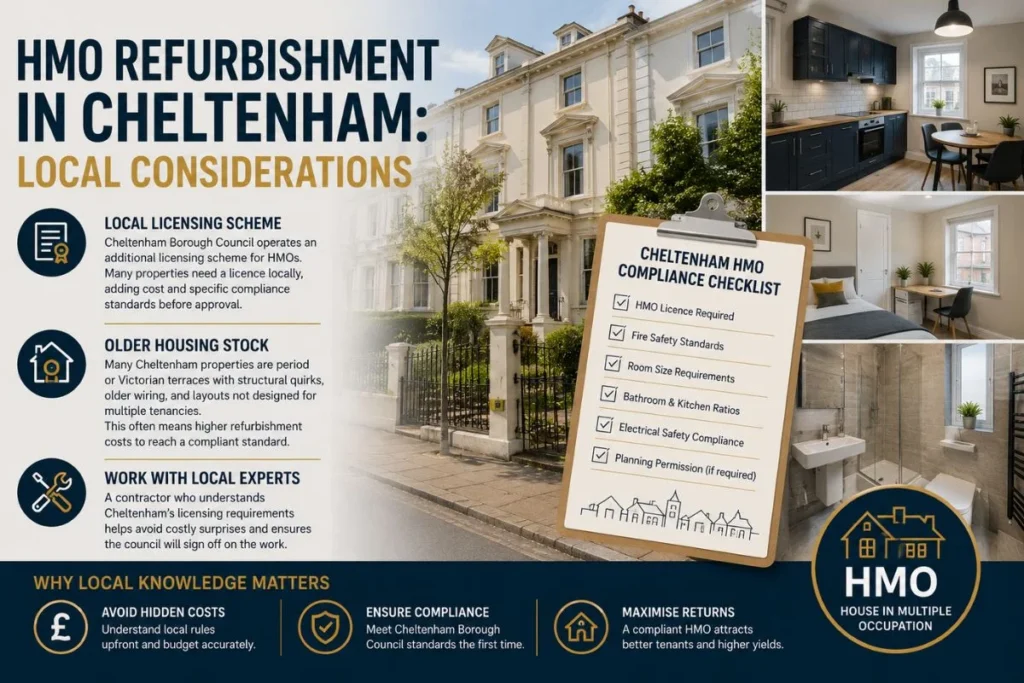
Cheltenham has its own specific planning and licensing landscape that landlords need to factor into their budget. Cheltenham Borough Council operates an additional licensing scheme for HMOs, meaning many properties that wouldn’t require a licence elsewhere still need one locally. This adds both a licensing cost and a set of physical standards your property must meet before approval.
The age and character of housing stock in and around Cheltenham is also worth factoring in. Many properties in the area, particularly period conversions and Victorian terraces, come with existing structural quirks, older wiring, and layouts that weren’t designed with multiple independent tenancies in mind. This often means refurbishment costs run somewhat higher than a like-for-like conversion in a newer property, simply because more remedial work is required to bring the building up to a compliant standard before the HMO-specific work even begins.
Working with a contractor who understands Cheltenham’s specific licensing requirements, rather than applying a generic national checklist, tends to prevent costly surprises partway through a project, particularly around what the council will and won’t sign off on.
Are Maintenance Costs Higher in HMOs UK-Wide?
This is one of the most common questions landlords ask once they’ve priced up the initial conversion, and the honest answer is yes, generally. Average maintenance costs for HMOs in the UK do tend to run higher than for a standard single-let property, and it’s worth planning for that from the outset rather than being caught off guard later.
The reason comes down to simple wear and tear. A property housing several independent tenants sees significantly more day-to-day use of shared kitchens, bathrooms, hallways, and communal areas than a single household would generate. Appliances, flooring, and fixtures in shared spaces tend to need replacing or repairing more frequently as a result.
Many landlords budget for ongoing HMO maintenance costs of somewhere between eight and fifteen percent of annual rental income, though this varies depending on the age and condition of the property and how well the initial conversion was carried out. This is another reason a properly executed conversion matters so much upfront. Cutting corners during the initial refurbishment, particularly around materials used in high-traffic shared areas, tends to translate directly into higher ongoing maintenance costs once tenants move in.
Regular safety compliance checks also form part of ongoing HMO costs that don’t apply to standard rentals, including annual gas safety certificates, periodic electrical inspection reports, and fire safety equipment servicing, all of which are legally required and worth building into your annual running costs from day one.
Budgeting Realistically for Your Conversion
Given how much variation exists between projects, the most reliable way to get an accurate figure for your specific property is a proper site assessment rather than relying on a generic average. A property’s existing layout, condition, and the local licensing requirements it needs to meet all shift the final number considerably.
It’s also worth building in a contingency of around ten to fifteen percent on top of your initial quote. Older properties in particular often reveal additional issues once work is underway, such as outdated wiring behind walls or structural issues not visible during an initial survey, and having that buffer prevents a mid-project budget crisis.
Why Work With a Specialist for Your HMO Conversion
HMO conversions sit in a different category from a standard renovation. Getting the compliance side wrong, whether that’s fire safety, room sizing, or licensing requirements, can mean a failed inspection, delayed lettings, or costly rework after the fact. Working with a contractor who has specific experience delivering HMO-compliant conversions and who understands the local Cheltenham licensing landscape is one of the most effective ways to avoid those setbacks.
At Hayden Property Development, we work with landlords and property investors across Cheltenham and the surrounding Cotswolds to deliver HMO conversions that meet licensing requirements the first time, without the guesswork. Every project starts with a proper conversation about your property and your numbers, not a generic quote pulled from a national average.
Frequently Asked Questions
What is the average cost of converting a house into an HMO?
Most standard three to five bedroom conversions fall between £15,000 and £40,000, depending on the scope of work required. Larger properties needing structural alterations or extra rooms can run considerably higher.
Are maintenance costs higher in HMOs across the UK?
Yes, generally. HMOs see more day-to-day wear on shared spaces, and landlords typically budget between eight and fifteen percent of annual rental income for ongoing maintenance, in addition to mandatory annual safety checks.
Does Cheltenham require an HMO licence?
Many HMO properties in Cheltenham require a licence under the council’s Additional Licensing scheme, even where a licence wouldn’t be required elsewhere. It’s worth checking your specific property against current Cheltenham Borough Council requirements before starting work.
How long does an HMO conversion typically take?
This varies by scope, but most conversions take anywhere from six to twelve weeks for a standard property, with larger structural projects taking longer.
What adds the most cost to an HMO conversion?
Fire safety compliance, additional bathroom provision, and any structural work needed to create compliant room sizes are typically the biggest cost drivers in most HMO conversions.
Final Thoughts
Converting a property into an HMO can be a genuinely strong investment, but only when the numbers are based on an accurate understanding of what the work actually involves, both at the conversion stage and in ongoing maintenance once tenants move in. Costs vary considerably depending on your property’s condition, size, and local licensing requirements, which is exactly why a proper, on-site assessment is worth far more than a generic average.
If you’re considering an HMO conversion in Cheltenham or the surrounding area, get in touch with our team for a straightforward, no-pressure quote based on your actual property, not a rough estimate pulled from a spreadsheet.