
The vanity colour is one of the first decisions to lock down in a bathroom renovation. It’s usually the largest block of colour in the room, and it sets the tone for the tiles, walls, taps and lighting that follow. Choose well, and the room feels considered. Choose poorly, and even good fittings end up looking mismatched.
This guide walks through the bathroom vanity colours that work best for the interior styles UK homeowners ask about most, along with practical guidance on choosing a colour that still looks right in ten years, not just ten months. Explore more of our work on the Hayden Property Development homepage.
Why Vanity Colour Matters More Than You Think
The vanity is usually the largest piece of furniture in a bathroom, so its colour carries a lot of the visual weight. Unlike a feature wall or a set of towels, it’s not something you can swap out on a whim. A few things worth weighing up before choosing a shade:
- Room size and light. Dark vanities can make a small, low light bathroom feel cramped. Pale vanities open the space up.
- Longevity. Bold, trend led colours tend to date faster than muted, versatile tones.
- Hardware and fittings. The colour needs to work with your tap finish, mirror frame and lighting, not just the tiles.
- Resale value. Neutral or classic colours tend to appeal to a wider range of buyers.
With that in mind, here’s the best colour for bathroom cabinets by interior style.
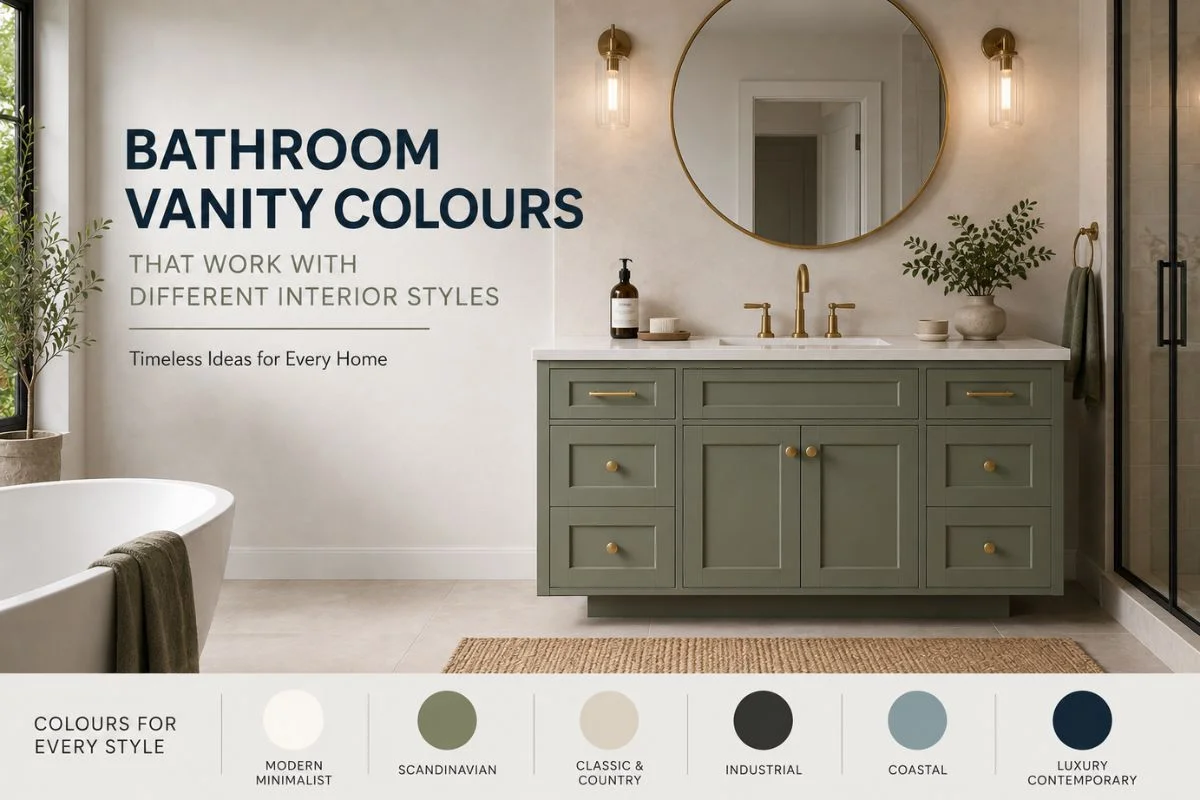
1. Modern and Minimalist Bathrooms
Modern bathrooms favour clean lines, uncluttered surfaces and a restrained palette. The vanity should feel like part of the architecture rather than a standalone statement piece.
Best colours: matte white, charcoal grey, soft black.
Flat, matte finishes in these tones look calm and architectural, especially against handleless cabinetry and slimline countertops. Matte black and charcoal vanities have become a common alternative to all white schemes, giving a modern bathroom more depth without introducing patterns.
Keep hardware minimal. Thin brushed steel or matte black handles let the vanity colour carry the room.
2. Scandinavian Bathrooms
Scandi style bathrooms rely on light, natural, calming palettes, often combined with warm wood tones.
Best colours: soft white, pale oak or ash wood, and muted sage green.
A pale wood or soft white vanity keeps the room feeling airy. A hint of sage or dusty blue on walls or accessories adds contrast without disrupting the calm, uncluttered mood. Scandi design relies on.
Woven baskets, a simple round mirror, and brushed or unlacquered brass taps add warmth without overcomplicating the palette.
3. Classic and Country Bathrooms
Traditional English bathrooms favour softer, more characterful colours that feel timeless rather than trend driven.
Best colours: cream or off white, sage or olive green, soft duck egg blue.
These shades sit comfortably alongside panelled cabinetry, traditional taps and freestanding baths. Sage green has become one of the most requested colours in period and country style renovations, largely replacing the once standard all white shaker vanity.
A Shaker style vanity with recessed panel doors, paired with a marble or stone effect worktop, gives a timeless finish that won’t need revisiting in a few years.
4. Industrial Bathrooms
Industrial style bathrooms lean on darker, more rugged tones alongside exposed materials like metal, concrete and brick.
Best colours: matte black, dark charcoal, warm walnut or dark oak.
A dark vanity anchors the room and complements exposed pipework, concrete effect tiles and metal framed mirrors. It also hides everyday marks well, which matters in a busy family bathroom.
The trade off is lighting. A well lit industrial bathroom feels moody and stylish. A poorly lit one feels gloomy, so it’s worth investing in good task and ambient lighting alongside the darker palette.
5. Coastal Bathrooms
Coastal style bathrooms borrow from seaside palettes: soft, weathered and light.
Best colours: off white or warm white, driftwood grey, powder or soft blue.
These tones echo sand, sea and driftwood without tipping into anything too literal. A driftwood grey vanity in particular adds texture and warmth while keeping the room bright.
Woven textures, brushed nickel taps and as much natural light as possible round out the look.
6. Luxury and Contemporary Bathrooms
For a more indulgent finish, richer and deeper tones now lead the way in bathroom vanity colour trends.
Best colours: deep navy, forest or bottle green, and matte black with brass or gold hardware.
Deep, saturated colours look premium and add real drama, particularly in larger bathrooms with good natural light. Paired with brass or gold hardware and a stone or marble worktop, a navy or forest green vanity gives a distinctly upscale finish.
Keep the deep colour to the vanity and keep walls and flooring pale. That way the vanity becomes the focal point rather than overwhelming the room.
More Vanity Colours Worth Considering
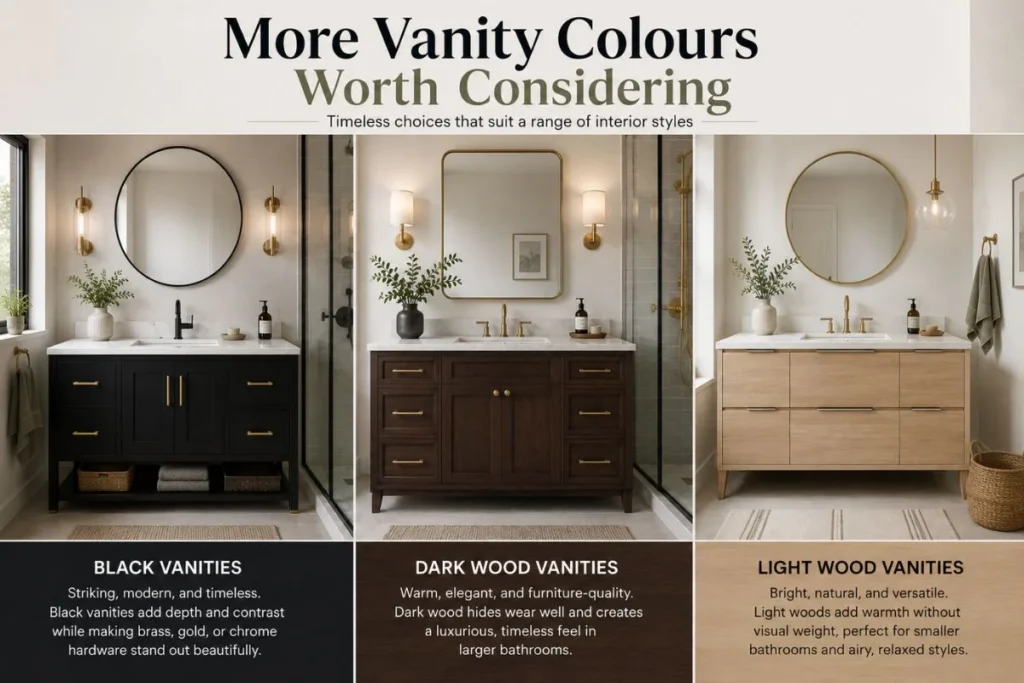
A few individual colours perform well across almost any bathroom style, regardless of the categories above.
Black vanities.
Once considered too bold for a bathroom, black has become one of the most requested finishes among design forward homeowners. In a well lit bathroom with pale walls, a black vanity creates strong contrast, hides everyday marks and water spots well, and makes brass, gold or chrome hardware stand out. Pair with a white or light marble effect worktop so the room doesn’t feel too dark.
Dark wood vanities.
Rich tones such as walnut, espresso or dark oak give a furniture quality, upscale feel. Dark wood hides scratches and general wear better than painted finishes and works particularly well in larger bathrooms paired with light countertops and walls. It suits a traditional or understated luxury bathroom that doesn’t rely on paint colour for character.
Light wood vanities.
Pale tones such as blonde oak, ash, birch or whitewashed finishes bring warmth without adding visual weight, which makes them well suited to smaller bathrooms or spaces with limited natural light. They work naturally with white or pale grey countertops and brushed brass or matte black hardware and suit Scandinavian, coastal and modern farmhouse styles.
How to Choose a Bathroom Vanity Colour
A short checklist worth running through before committing to a colour:
- Match the mood, not just the trend. Choose a colour that suits how you want the room to feel, whether that’s calm, bold, warm or crisp, rather than whatever’s most photographed this year.
- Test it in your actual light. Bathroom lighting, especially in north facing rooms, changes how a colour reads. Get a sample and check it morning and evening.
- Factor in room size. Darker vanities suit larger or well lit bathrooms. Paler tones help smaller or darker rooms feel more spacious.
- Think about maintenance. Matte black and dark tones hide toothpaste splashes better than gloss white. Pale tones show less limescale than very dark ones in hard water areas.
- Coordinate rather than match. The vanity doesn’t need to match the tiles or walls exactly. A complementary tone usually looks more considered than an exact match.
Final Thoughts
There’s no single best vanity colour. The right choice comes down to your bathroom’s size, its light, and the interior style you’re working towards. Light, soft tones generally suit smaller and Scandinavian style bathrooms, while deeper, richer colours suit larger, more contemporary or luxury spaces.
If you’re planning a bathroom renovation and want advice tailored to your space, our design team can talk you through vanity options, materials and finishes that suit your home and budget.
FAQs
What is the best colour for a bathroom vanity?
There’s no single best colour. It depends on your bathroom’s size, light and style. White and soft grey remain the safest, most flexible choices for almost any bathroom, while sage green, navy and matte black stand out if you want more character. Light neutral tones suit smaller or darker bathrooms. Deeper, richer colours suit larger, well lit spaces.
What are the trendy colours for bathroom vanities right now?
The leading trends are muted, warm neutrals and deep, saturated tones such as sage and olive green, warm greige, navy and matte black, replacing the all white schemes that dominated the previous decade. Two tone vanities, with a dark base and a light stone worktop, are also gaining ground.
What cabinet colour is outdated?
Honey toned oak, orange tinted cherry wood and glossy builder grade cream or ivory finishes read as dated, especially paired with gold tone 1990s hardware. Flat, cool toned all white schemes with little texture are also starting to feel less current as warmer neutrals and richer colours take over.
What is the most timeless bathroom vanity colour?
White remains the most timeless choice because it acts as a neutral backdrop that works with almost any tile, worktop, or hardware finish, and it doesn’t date the way stronger colours can. Soft grey is a close second, offering similar flexibility with more warmth and depth.
What is the best colour for bathroom cabinets in a small bathroom?
Light, matte tones such as soft white, pale grey or pale oak work best, since they reflect light and make the space feel larger.
Should my bathroom vanity match my wall colour?
Not necessarily. A complementary tone usually looks more considered than an exact match.